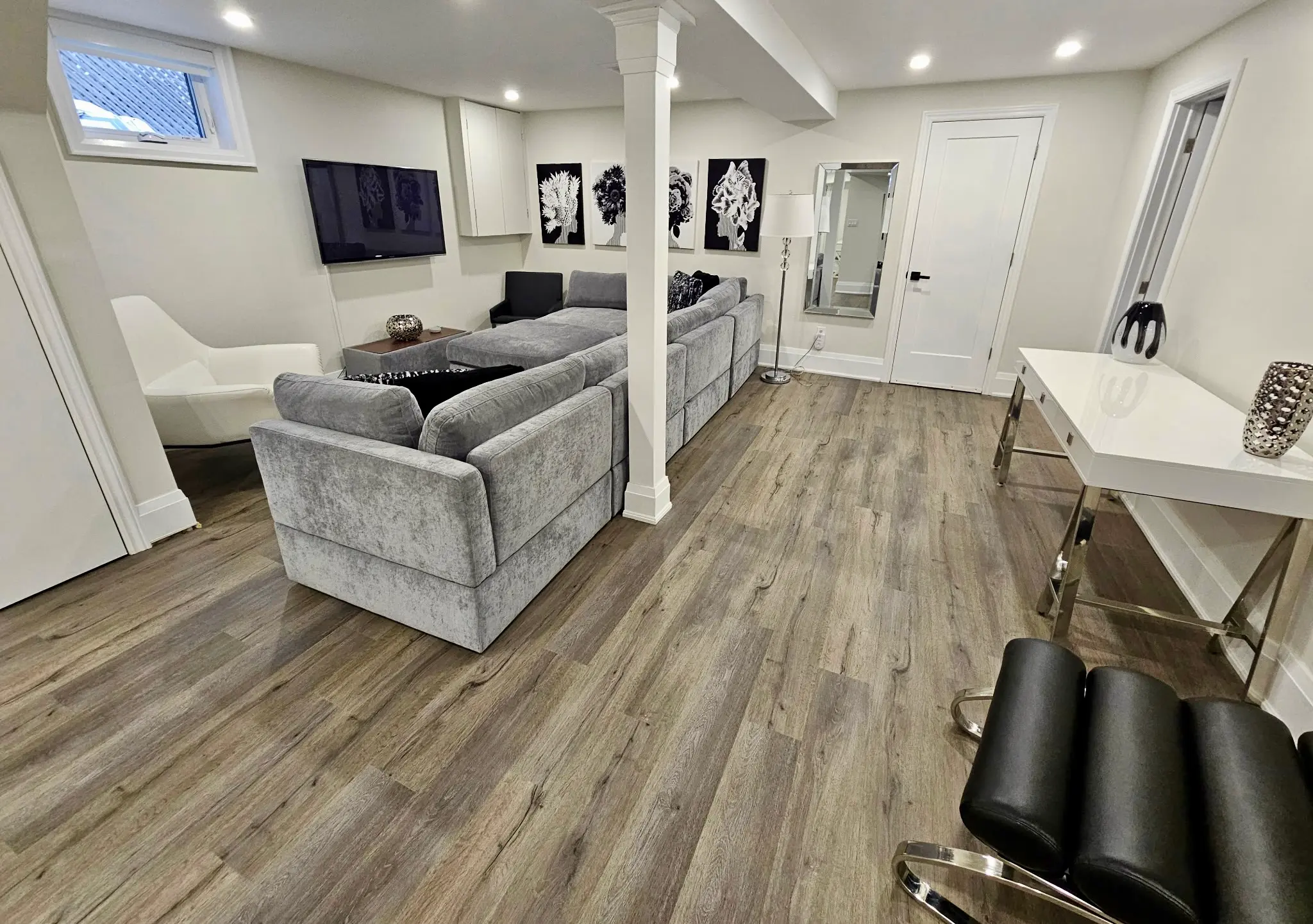
Luxury vinyl plank flooring in a bright living room

Luxury Vinyl

Waterproof, and genuinely convincing.

A practical guide to luxury vinyl — what it actually is, where it beats a wood floor outright, what drives the price, and how it compares to the alternatives. Written by the people who supply it.

Material

Fully waterproof vinyl

Best for

Basements · Moisture · Busy homes

Price

$$ $2.50–$5.50 / sq ft

Style

Wood looks → Stone looks

01 — Overview

What exactly is luxury vinyl?

Luxury vinyl is a manufactured floor, and it does not pretend otherwise. A printed design layer sits under a clear wear layer, bonded to a vinyl core. The design is a photograph of wood or stone rather than the material itself.

That sounds like a compromise until you consider what it buys you. The core does not absorb water, which makes the floor genuinely waterproof rather than water-resistant — a distinction that matters enormously below grade.

It is the fastest-growing segment in flooring, and the reason is simple: modern printing and texturing have got good enough that a well-made luxury vinyl floor can be nearly indistinguishable from real wood, marble or slate.

Fully waterproof
The vinyl core does not absorb water. This is the property that sets it apart from every wood-based floor.
Cannot be refinished
The wear layer is what you get. When it is worn through, the floor is replaced rather than renewed.
Thickness matters
Thicker material means better underfoot comfort, noise reduction and durability.
Our basement recommendation
Luxury vinyl is the best choice for below-grade spaces, and it is what we recommend there by default.
02 — Choosing

Is luxury vinyl right for your project?

Luxury vinyl is the floor people are often surprised to be recommended, particularly if they came in expecting to buy wood.

Here is the honest version, including where a wood floor would serve you better.

A good choice if…

  • The room is below grade. Luxury vinyl is the best choice for basements — fully waterproof and comfortable with moisture.
  • Water is a genuine risk in the space, whether from spills, appliances or humidity.
  • You want a wood or stone look without the cost or the care that real material demands.
  • The floor needs to take heavy traffic from a household that is not going to treat it gently.
  • You would rather the installation was straightforward.

Worth considering alternatives if…

  • You want genuine wood underfoot. However convincing the print, it is a print.
  • You want a floor that can be refinished and renewed rather than replaced. Vinyl cannot be refinished at all.
  • You are buying at the cheaper end of the market, where repetition in the printed pattern can become visible across a large floor. Ask to see more than a single sample board.

If you are choosing between vinyl and a wood floor, the level of the room usually decides it before anything else does. Tell us where it is going.

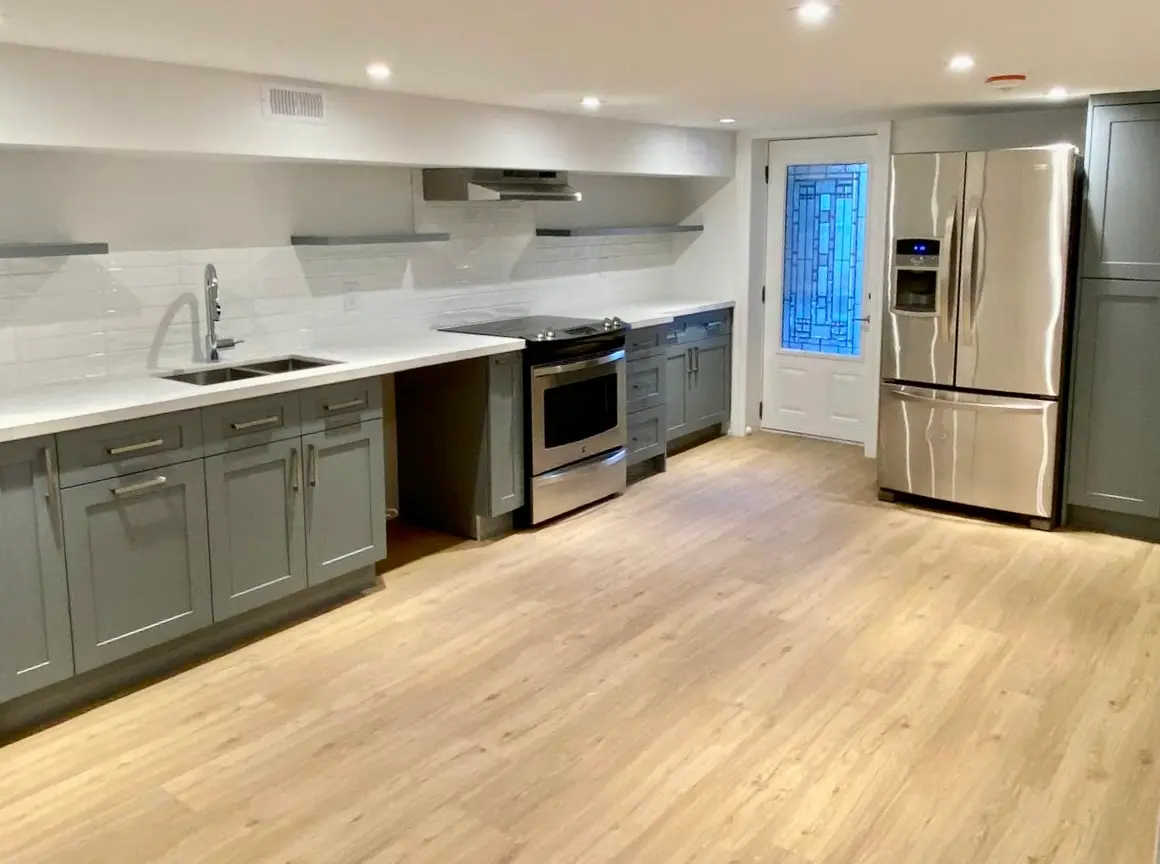
Warm luxury vinyl plank flooring in a finished basement kitchenette

Fully waterproof · Below grade · Convincing

A finished basement kitchenette in luxury vinyl. Below grade is exactly where this material earns its place, and where we would steer you away from wood.

03 — Styles & options

The choices you'll actually be asked to make.

Choosing a floor isn't really one decision, it's several smaller ones. None of them are difficult once you know what they mean.

Look & format

Designs run from wood planks through to stone and marble tiles, and the good ones are convincing. What separates a product that reads as real from one that does not is usually the interaction between the printed layer and the surface texture beneath it.

Formats follow the material being imitated: plank for wood looks, tile for stone.

Wood plankStone tileMarble

Thickness & wear layer

Two different measurements, and the second is the one that decides how long the floor lasts. Overall thickness affects how the floor feels underfoot and how much sound it absorbs; the wear layer is the clear top surface that takes the abuse.

Thicker material means better underfoot comfort, noise reduction and durability. In a busy household it is worth paying for.

Colour & pattern

Vinyl offers vast colour ranges, far wider than you will find in real wood.

The caveat is worth stating plainly: repetition in patterns can sometimes be visible on cheaper products. Across a large open floor, a short repeat becomes obvious in a way it never does on a sample board. Look at as much of the product as you can before committing.

Texture

Surface texture is what stops a printed floor reading as printed. Embossing that follows the grain of the image is the detail that separates convincing products from flat ones — worth running a hand over rather than judging by eye.

Installation

Luxury vinyl is easy to install, which is part of its appeal and part of why it has grown so quickly.

That said, we are primarily a supply business — we let installers do their thing so you can choose someone you know and trust.

04 — Pricing

What does luxury vinyl cost?

Luxury vinyl spans a very wide price range, and the gap between the cheap end and the good end is more visible in this material than in most.

What we can do is show you what you are paying for, so the quote you eventually get makes sense.

Material

This is what we quote: the flooring itself, priced per square foot against your specification. Registered trade clients receive trade pricing on the same products.

Installation

Quoted separately, by your installer. We're primarily a supply business — we let installers do their thing so you can choose someone you know and trust. If you need a recommendation in Ontario, get in touch and we may be able to help.

05 — Comparison

Luxury vinyl, and the alternatives.

Three comparisons cover most of the decision. If one of the right-hand columns describes your project better than the left, that is the direction worth exploring.

Luxury vinyl vs. Solid hardwood

Choose luxury vinyl

For basements, moisture and heavy traffic. Fully waterproof, where hardwood is not waterproof at all.

Choose solid hardwood

When you want genuine wood and a floor that can be refinished repeatedly rather than replaced.

Luxury vinyl vs. Engineered hardwood

Choose luxury vinyl

Below grade, or wherever water is a real risk. Engineered is still a wood floor and behaves like one.

Choose engineered

When you want a real wood surface with more stability than solid, above grade.

Luxury vinyl vs. Laminate

Choose luxury vinyl

When water matters. Vinyl is genuinely waterproof; laminate is not, whatever the packaging says.

Choose laminate

When budget leads and the room stays dry. Laminate is the most cost-effective option.

A fuller side-by-side of all four materials lives in our flooring features checklist.

A note from Trade Flooring

Aaron

President

There are essentially 2 kinds of vinyl flooring: glue down and click. Most people choose the click as it's easier to install and remove.

What is super important for all flooring installations is a smooth and level subfloor, and this is particularly true for vinyl. Thinner vinyl will bend and shape itself to bumps in the floor and crack over time.

The other thing to note is that the click system is the weak point in the floor, as it's only half the thickness of the floor itself. This is where a thicker floor matters most. Not only will a thicker vinyl offer you more comfort underfoot and noise reduction, it will also come with a thicker click mechanism, which will offer more strength and durability.

Another important thing to look for is the wear layer, which is the clear coating on top of the vinyl flooring. Cheaper floors have an 8 or 12 mil wear layer which will not stand up to heavy traffic. Look for something with a 20–22 mil wear layer to ensure that your flooring can stand up to normal wear and tear and last for years. Patterns, colours and textures are almost endless when it comes to vinyl flooring, but it needs to look good AND last for it to have any real value.
06 — In place

See it installed.

Samples tell you about a material. Finished rooms tell you what it does to a space — how it handles daylight, how it meets the walls, how it reads across a whole floor.

Warm luxury vinyl plank in a basement kitchenette
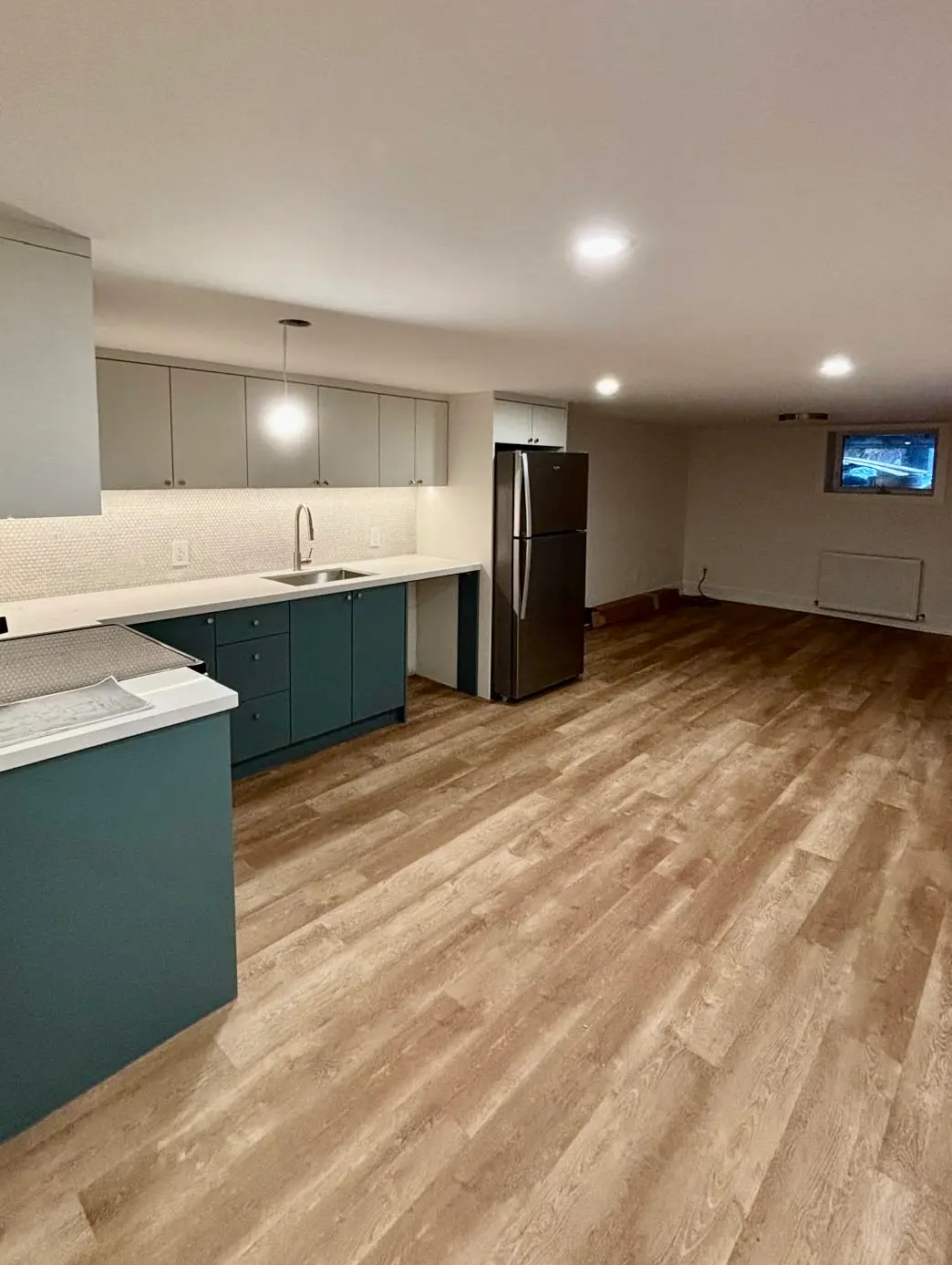
Light luxury vinyl plank in a kitchen with grey cabinets

More completed work in the project gallery.

07 — Questions

Questions people actually ask.

Yes. The vinyl core does not absorb water, which makes it fully waterproof rather than water-resistant. This is the clearest practical difference between vinyl and laminate.

It is our default recommendation there. Luxury vinyl is the best choice for below-grade spaces — fully waterproof and comfortable with moisture. We generally do not recommend solid or engineered hardwood below grade unless a proper subfloor is installed.

The good products are nearly indistinguishable from real wood, marble or slate. On cheaper products, repetition in the printed pattern can become visible across a large floor, so it is worth seeing more than one sample board.

No. Vinyl and laminate cannot be refinished. The wear layer determines the life of the floor, which is why its thickness matters.

Yes. Thicker material means better underfoot comfort, noise reduction and durability. The wear layer specifically determines how long the surface lasts.

For vinyl worth laying, budget roughly $2.50–$5.50 per square foot for the material. Thinner, cheaper vinyl exists, but it does not last. Wear layer, overall thickness, design quality and format decide where you land in that range. Material and installation are costed separately.

Usually not, by choice. We're primarily a supply business, so you can use an installer you know and trust. If you need a recommendation in Ontario, get in touch and we may be able to help.

Choosing flooring for a project?

Tell us what you're working on and we'll help you find the right material — luxury vinyl or otherwise.

Talk to Trade Flooring