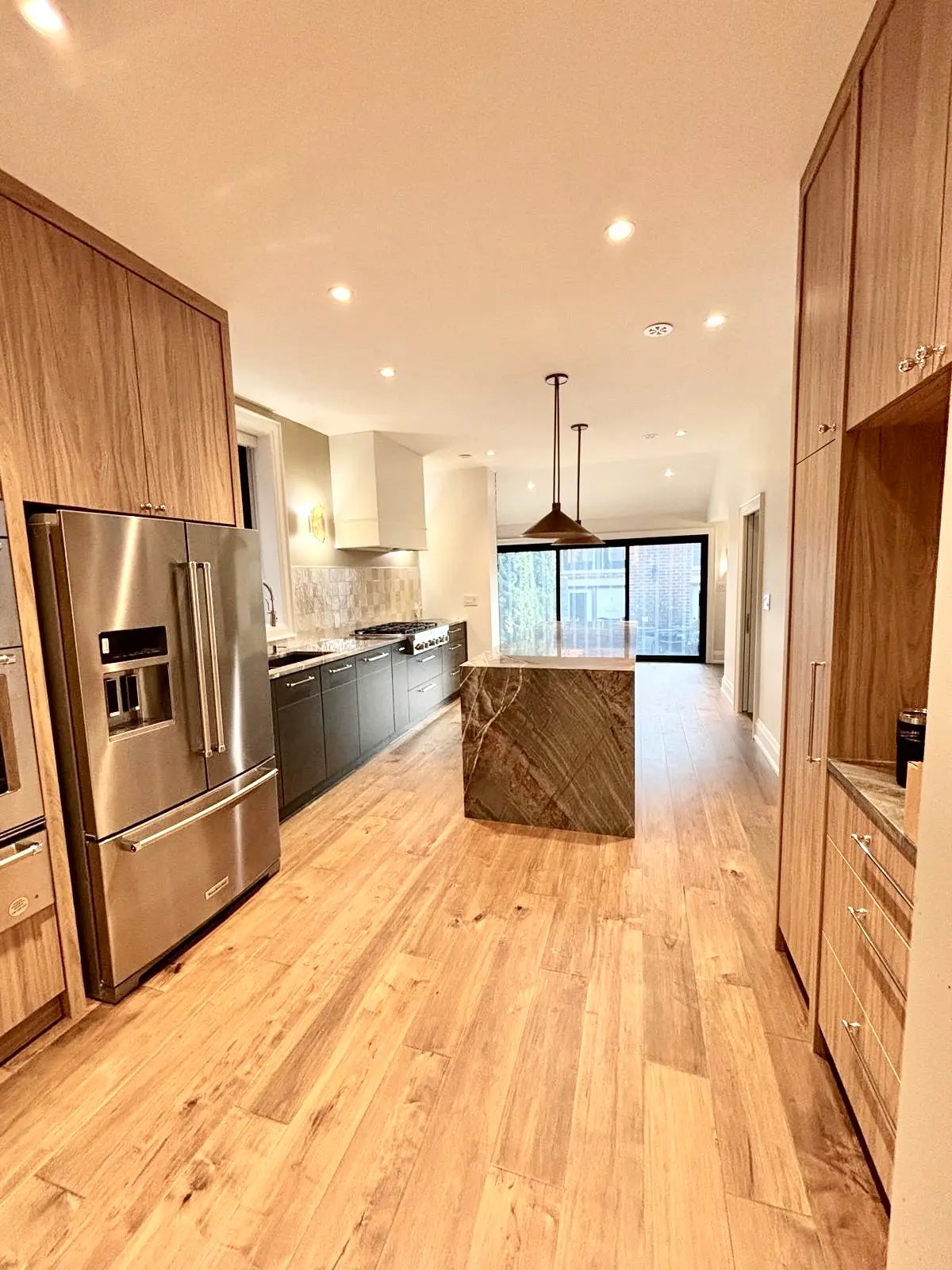
Oak hardwood flooring in a finished Ontario home

Hardwood Flooring

The warmth of real wood, made to last.

A practical guide to solid hardwood — what it actually is, how to choose it, what drives the price, and how it compares to the alternatives. Written by the people who supply it.

Material

Real hardwood, solid through

Best for

Homes · Renovations · New builds

Price

$$$$ From $6.99 / sq ft

Style

Classic → Contemporary

01 — Overview

What exactly is hardwood flooring?

Hardwood flooring is what it sounds like: planks milled from a single piece of solid timber. There's no core, no veneer, no printed layer. What you walk on is the same wood all the way through.

That one fact explains almost everything else about it. Because the plank is solid, the surface can be sanded back and refinished many times over — which is why floors laid decades ago are often still in service, looking better than the year they went in.

It also explains hardwood's one real demand. Wood is a natural material that responds to the air around it, expanding in humid months and contracting in dry ones. Ontario gives it plenty to respond to, which is why acclimatisation, correct installation and sensible indoor humidity matter more with hardwood than with a manufactured floor.

Solid through
One species of timber from the wear surface to the underside — not a veneer bonded to a core.
Refinishable
Can be sanded and refinished many times. Engineered hardwood manages one or two passes; vinyl and laminate, none.
Typically ¾" thick
The most common thickness for solid and engineered hardwood, though ½", ⅝" and 9/16" are all made.
Moves with humidity
Expands and contracts seasonally. Best suited to spaces at or above grade where humidity stays reasonably stable.
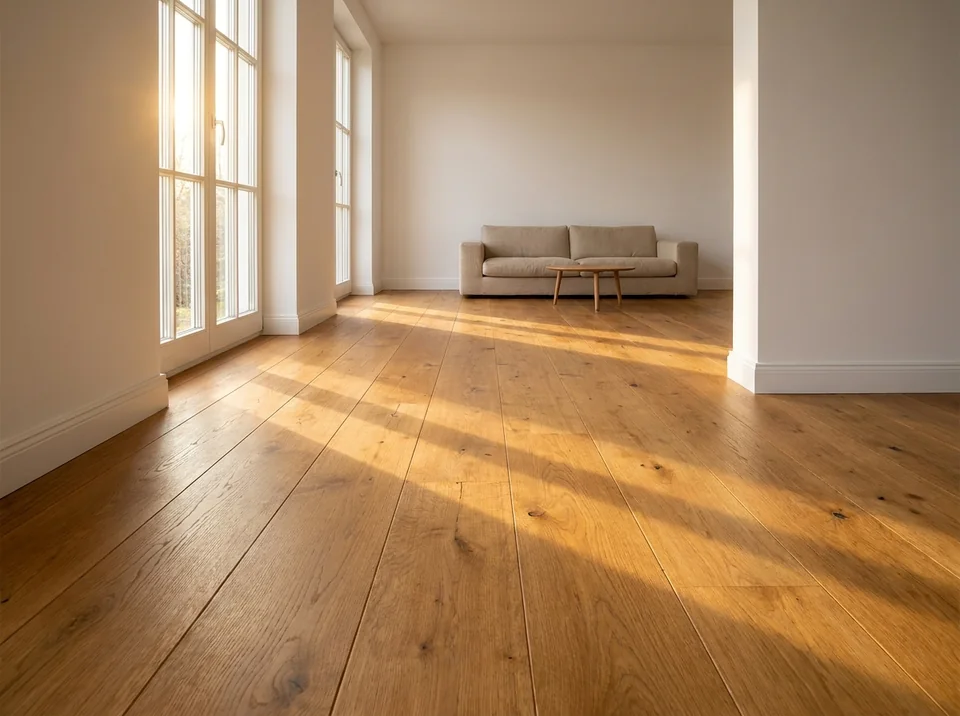
Wide-plank solid oak hardwood flooring in raking afternoon light, showing grain and natural character
Solid oak in low afternoon light. Grain, knots and colour shift across boards are characteristics of the material, not flaws in it — and they are the reason no two hardwood floors look quite the same.
02 — Choosing

Is hardwood right for your project?

This is the part most flooring guides skip, and it's the part that actually matters. Hardwood is the floor most people picture when they imagine a beautiful room — but it isn't the right answer for every room, and a floor fighting its environment is a problem no specification can fix.

So here is the honest version, including the cases where we'd point you somewhere else.

A good choice if…

  • You want genuine wood — the grain, the depth, and the way it earns character rather than losing it.
  • You're thinking in decades. Hardwood is usually renewed, not replaced.
  • You'd rather refinish than rip out when the floor eventually looks tired.
  • You care about natural material and craftsmanship, and you want the floor to be the real thing.
  • The space sits at or above grade, with heating and humidity that stay reasonably steady.

Worth considering alternatives if…

  • The room is below grade. For basements we generally recommend luxury vinyl — solid and engineered hardwood aren't suited to below-grade moisture without a proper subfloor.
  • The floor will meet standing water. Hardwood is not waterproof — where moisture is a genuine risk, a waterproof material is the safer specification.
  • You want very wide planks. Engineered handles width far better in a climate with our humidity swings.
  • Budget is the deciding factor. Laminate and luxury vinyl reach a similar look for less.

If you're weighing two of these against each other, tell us about the room — its level, its traffic, and how long you plan to be there. That conversation usually settles it faster than a spec sheet.

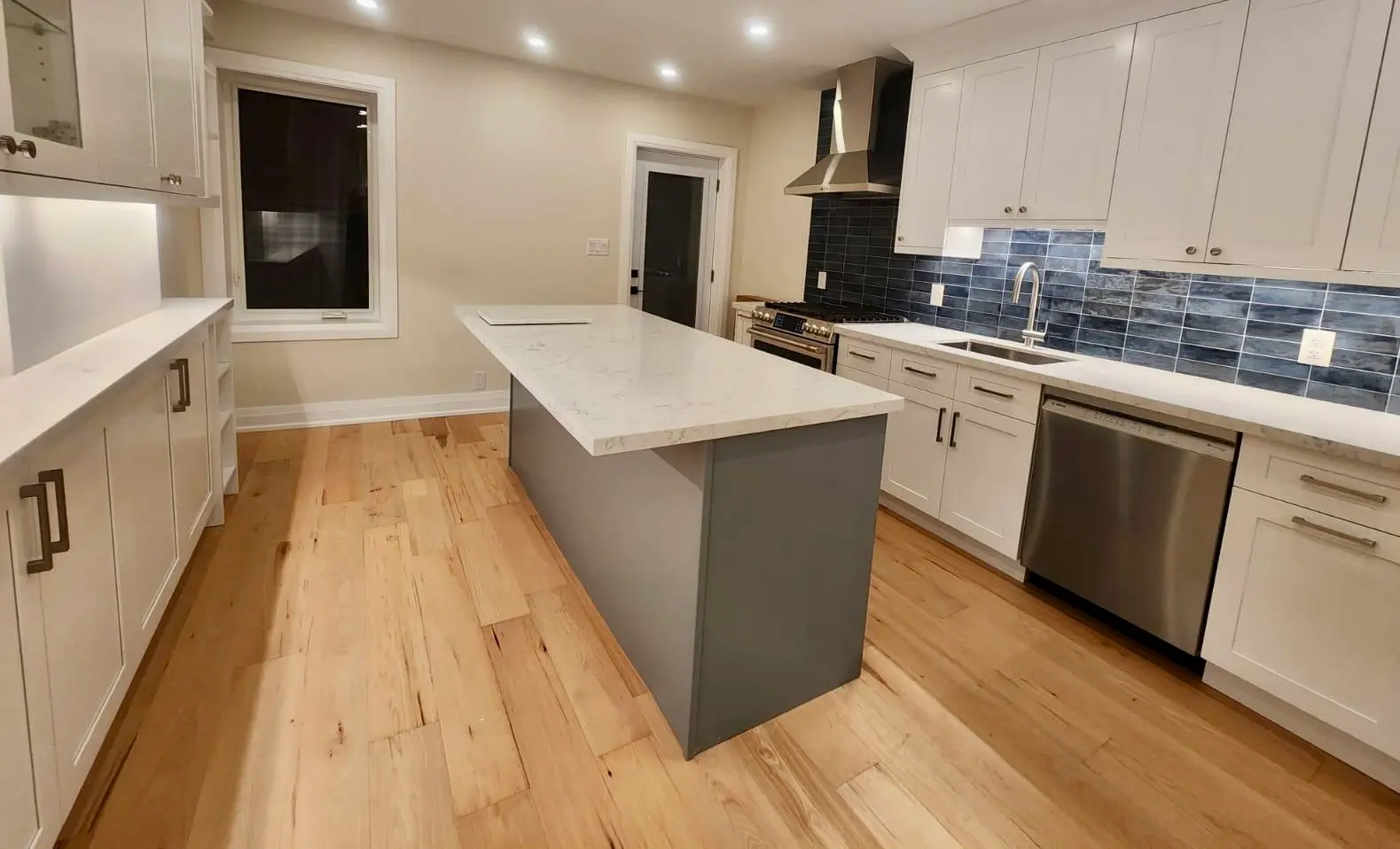
Maple hardwood flooring running through a bright open-plan kitchen

Real wood · Natural character · Timeless

Maple through an open-plan kitchen and living space. A single continuous floor across a whole level makes rooms read as one — one of the quiet reasons hardwood still wins on open layouts.

03 — Styles & options

The choices you'll actually be asked to make.

Choosing hardwood isn't really one decision, it's five or six smaller ones. None of them are difficult once you know what they mean — and most of them are about appearance rather than performance.

Species

Species sets the base colour, the grain pattern and the hardness. Oak is the most widely used and the most forgiving; maple reads cleaner and more contemporary; walnut is darker and richer; hickory is readily available here and carries the most grain variation of the four. Through our manufacturer network we can source or custom-make well beyond the usual list.

OakMapleWalnutHickoryCustom species on request

Plank width

Narrow boards read traditional; wider boards feel calmer and more modern because you see fewer seams. Canadian hardwood is typically milled at 2¼", 3", 4" and 4¼".

For genuinely wide planks, engineered hardwood is preferred — its plywood base prevents the cupping and warping that Canada's large seasonal humidity swings can otherwise cause.

2¼"3"4"4¼"

Grade & character

Grade describes how much natural variation you'll see — mineral streaks, colour movement and knots. It is purely aesthetic. Every grade is equally durable; the cleaner and more uniform the grade, the higher the price.

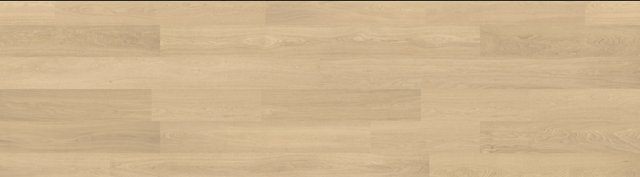
AB Select and Better grade European White Oak flooring swatch
AB — Select & Better80% clean, 20% with mineral streaks. The calmest, most uniform look.
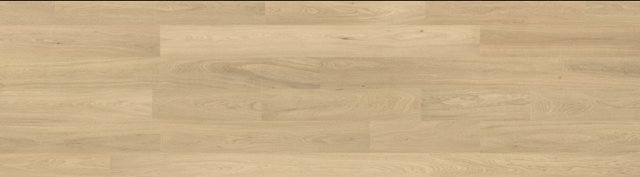
ABC Select grade European White Oak flooring swatch
ABC — Select60% clean, 40% with streaks and minimal knots. A balanced amount of character.
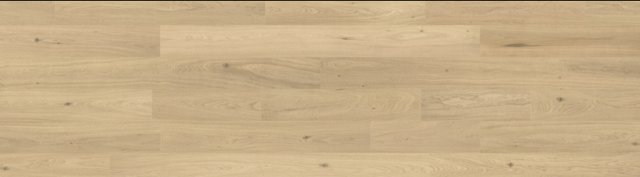
ABCD Common or Character grade European White Oak flooring swatch
ABCD — Character40% clean, 60% with streaks and generous knots. Rustic and organic.

Colour & stain

Standard colours are widely available across solid and engineered hardwood, and we can custom-match a colour you bring us.

One thing worth knowing: the darker the stain, the less you see of streaks and knots. That's why many darker colours simply aren't offered in the cleanest grades — you'd be paying for character the stain then hides.

Finish & texture

Finishes run from matte to high gloss. Matte hides scratches and dust noticeably better; high gloss is dramatic but shows wear sooner. Surface texture matters just as much as sheen — smooth, wire-brushed, hand-scraped and distressed all wear and read differently.

Finish names vary between manufacturers, so always look at a physical sample before committing.

MatteSatinGlossWire-brushedHand-scraped

Board length & pattern

Most flooring ships in random lengths of roughly 1–6ft per box, which keeps waste and cost down. All-long-board runs are possible for a more premium look, at a premium price.

Patterns such as herringbone and chevron are a different proposition — they require fixed-length boards, and both material and installation are more involved.

Random lengthFixed lengthHerringboneChevron
04 — Pricing

What does hardwood flooring cost?

There is no single price for hardwood — the figure below is where it starts, not where it ends. Species, grade, width and finish each move the number, and they compound.

What we can do is show you what you're paying for, so the quote you eventually get makes sense.

Material

This is what we quote: the flooring itself, priced per square foot against your specification. Registered trade clients receive trade pricing on the same products.

Installation

Quoted separately, by your installer. We're primarily a supply business — we let installers do their thing so you can choose someone you know and trust. If you need a recommendation in Ontario, get in touch and we may be able to help. For a custom floor that goes beyond standard planks, we'll likely want to install it ourselves.

05 — Comparison

Hardwood, and the alternatives.

Three comparisons cover most of the decision. If one of the right-hand columns describes your project better than the left, that's the direction worth exploring.

Hardwood vs. Engineered

Choose hardwood

For maximum longevity and the ability to refinish repeatedly. Solid wood throughout, in the traditional widths.

Choose engineered

For wide planks, or where humidity swings are a concern. A real wood veneer over a stable plywood core — refinishable once or twice depending on veneer thickness.

Hardwood vs. Luxury vinyl

Choose hardwood

When you want genuine wood underfoot and the floor to be a long-term asset rather than a surface.

Choose luxury vinyl

For basements, bathrooms and anywhere water is a real risk. Fully waterproof, easy to install, and convincing enough that most people don't look twice.

Hardwood vs. Laminate

Choose hardwood

When authenticity and lifespan matter more than the upfront number.

Choose laminate

When budget leads. The most cost-effective option with a wide colour range — but note that MDF/HDF cores are not truly waterproof, whatever the packaging claims.

A fuller side-by-side of all four materials lives in our flooring features checklist.

A note from Trade Flooring

Aaron

President

This is coming from a person who loves wood and natural products, so if your budget allows and if you plan to stay in this home for a long time, I would definitely choose solid hardwood as it ticks many boxes and is the only product that, if installed properly, can last decades.

It is a more traditional look and is sold in a narrower plank width to avoid warping and cupping, but it can be refinished multiple times.

The bottom line is that the upfront cost of the material is more, but over the course of its lifespan it is an economical choice, because no engineered floor will outlast solid hardwood. Due to the fact that solid wood comes in narrow planks, this option is more limited today — only about 5% of the market installs solid hardwood in Canada now. Wider planks are generally more desirable these days, as well as the stability that comes from a plywood base.
06 — In place

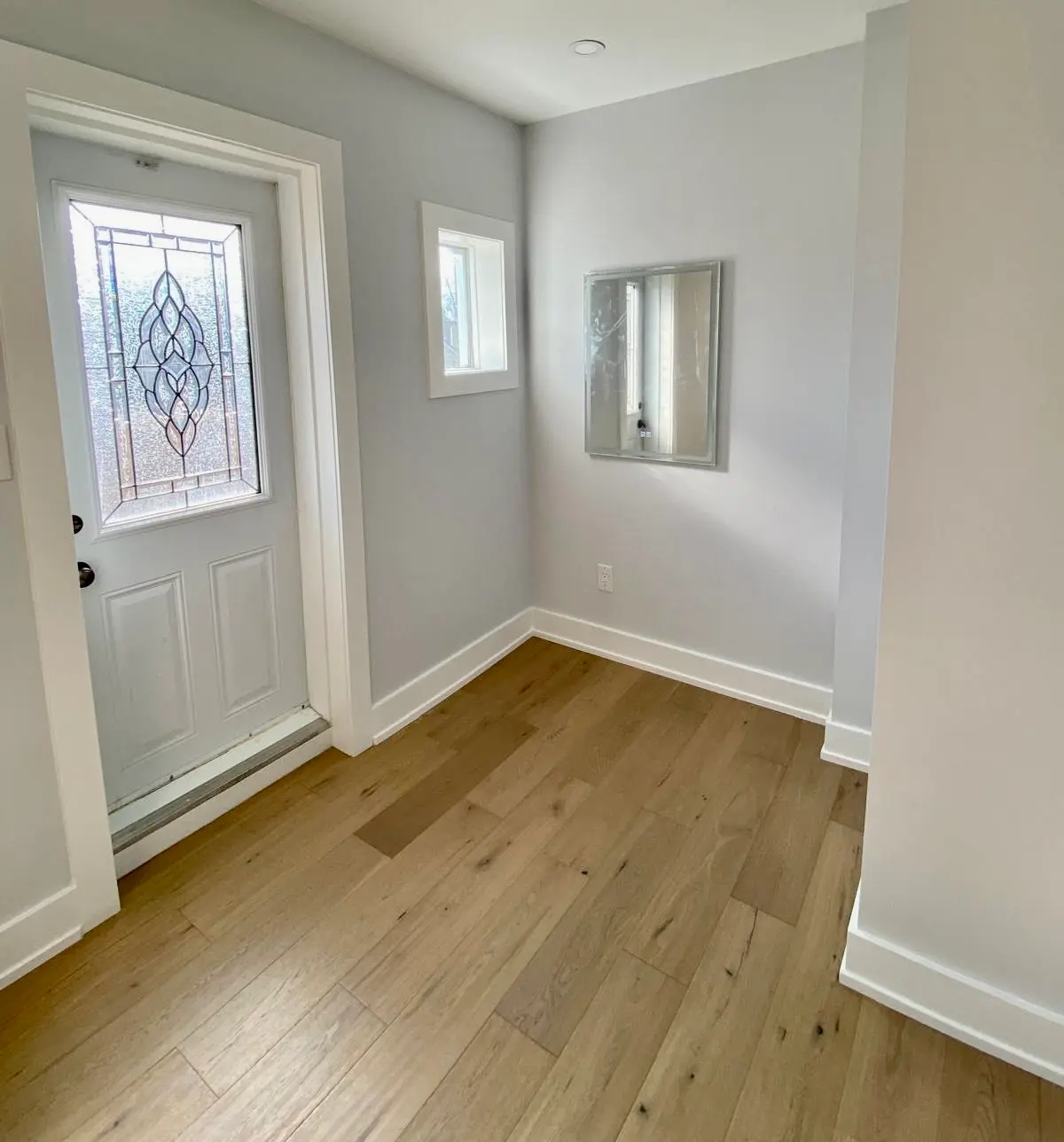
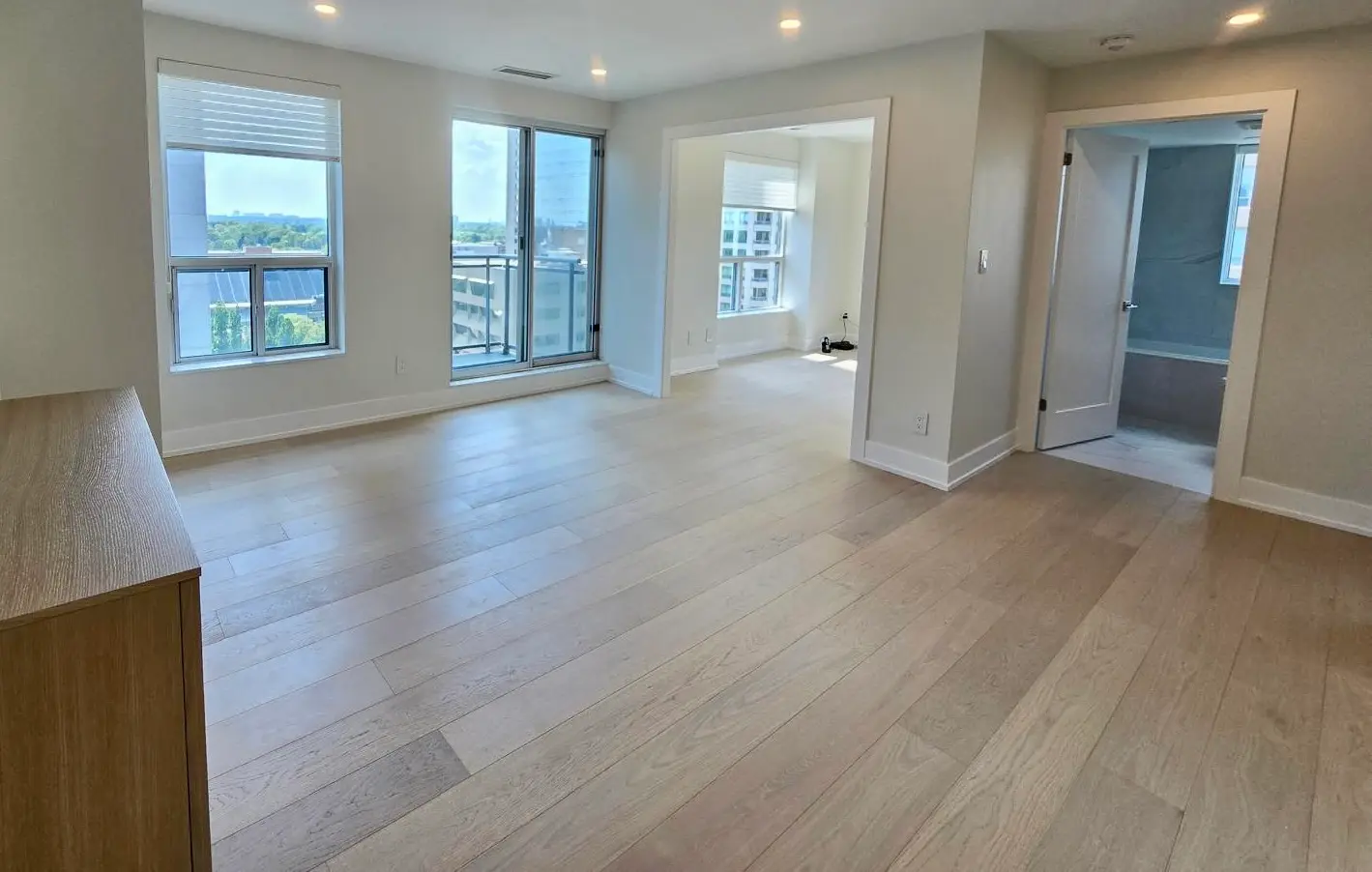
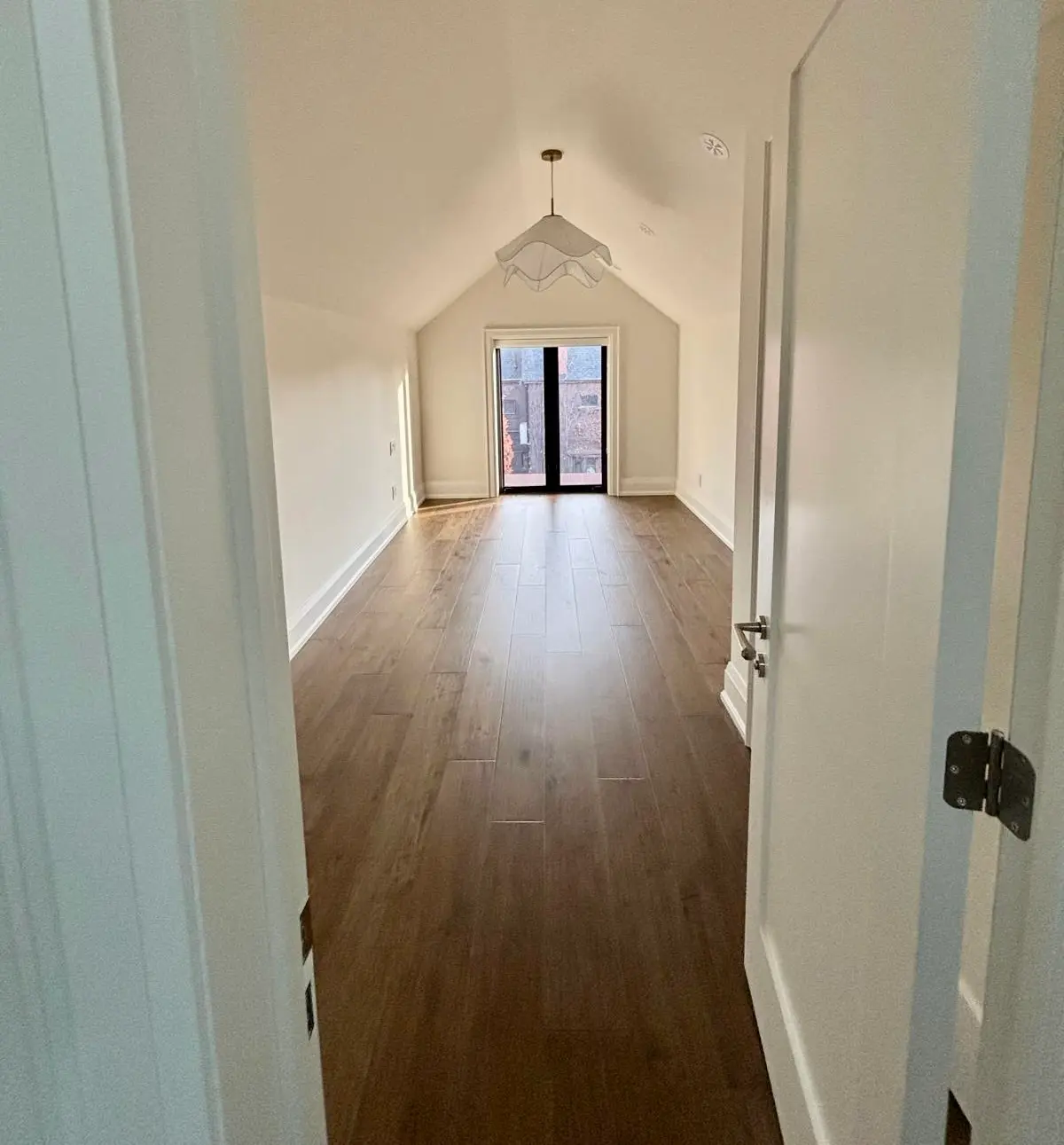
See it installed.

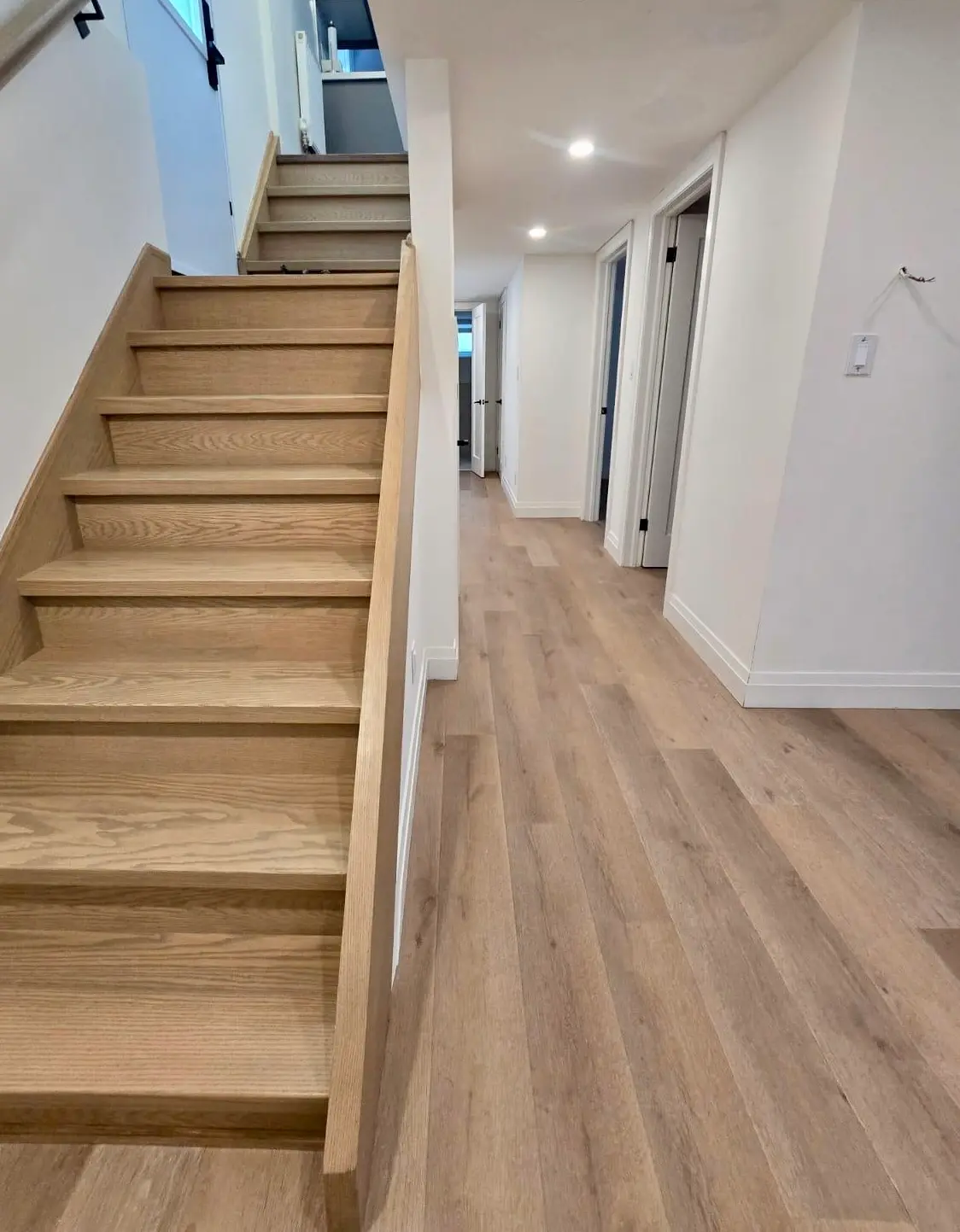
Samples tell you about a material. Finished rooms tell you what it does to a space — how it handles daylight, how it meets the walls, how it reads across a whole floor.

Warm oak hardwood flooring in a residential entryway
Light oak hardwood flooring in an open-plan condo living space
Dark hardwood flooring in a vaulted hallway

More completed work in the project gallery.

07 — Questions

Questions people actually ask.

Yes. Solid hardwood is milled from a single piece of timber — the same wood from the surface through to the underside of the plank. Engineered hardwood is also real wood, but as a veneer bonded to a plywood or solid core.

Properly installed and looked after, decades — often the working life of the building. Because it can be refinished repeatedly, hardwood tends to be renewed rather than replaced.

Yes, many times over. This is its main practical advantage: engineered hardwood manages one or two passes depending on veneer thickness, and vinyl and laminate cannot be refinished at all.

At or above grade, yes — it's one of the most common floors in the province. Our humid summers and dry winters do make wood move, so acclimatisation, correct installation and steady indoor humidity matter. Below grade, we generally recommend luxury vinyl instead.

Solid hardwood is one piece of wood throughout. Engineered has a real wood veneer over a plywood or solid core, which makes it more dimensionally stable and available in wider planks — a meaningful advantage in a climate like ours.

Expect about $6.99 per square foot and up for the material. Species, board width and grade move it from there, and so does the lumber market, which fluctuates — your exact figure is quoted against your specification. Material and installation are costed separately — we supply the material; your installer quotes the labour.

Usually not, by choice. We're primarily a supply business, so you can use an installer you know and trust. If you need a recommendation in Ontario, get in touch and we may be able to help. For a custom floor beyond standard planks, we'll likely want to install it ourselves.

Choosing flooring for a project?

Tell us what you're working on and we'll help you find the right material — hardwood or otherwise.

Talk to Trade Flooring